Best Snacks for Healthy Teeth in School Lunches
July 14, 2026 9:00 amPacking a school lunch can feel like a small daily puzzle. The food needs to be easy to eat, filling enough to last through the afternoon, and appealing enough that it does not come home untouched. Then, somewhere between the sandwich, the water bottle, and the last-minute search for a matching lid, parents are also supposed to think about nutrition and dental health.
Fortunately, tooth-friendly snacks do not have to be bland or complicated. A few smart choices can help reduce how long sugar and starch stay on a child’s teeth while still giving them foods they will actually eat.
At the Sunnyvale, TX office of Anne Lindley, DDS, Dr. Anne Lindley helps families build realistic habits around children’s oral health. School lunches are a good place to start because the foods children eat during the day can affect their teeth long after the lunch period ends.
Best Snacks for Healthy Teeth in School Lunches
The best lunchbox snacks tend to be lower in added sugar, less likely to stick to teeth, and filling enough to keep children from reaching for another sweet snack an hour later.
Cheese, fresh fruit, crunchy vegetables, yogurt, whole-grain options, and age-appropriate nuts or seeds can all fit into a balanced school lunch. Water also deserves a regular place in the lunchbox because it helps rinse away food particles without bathing the teeth in sugar.
However, the goal is not to build a picture-perfect lunch every morning. Children have preferences, schools have rules, and some days begin with everyone running late. A more useful approach is to find a few dependable combinations and rotate them through the week.
Cheese Is an Easy Lunchbox Choice
Cheese works well in school lunches because it is easy to portion, simple to eat, and usually familiar to children. It also does not coat the teeth in sugar the way many packaged snacks do.
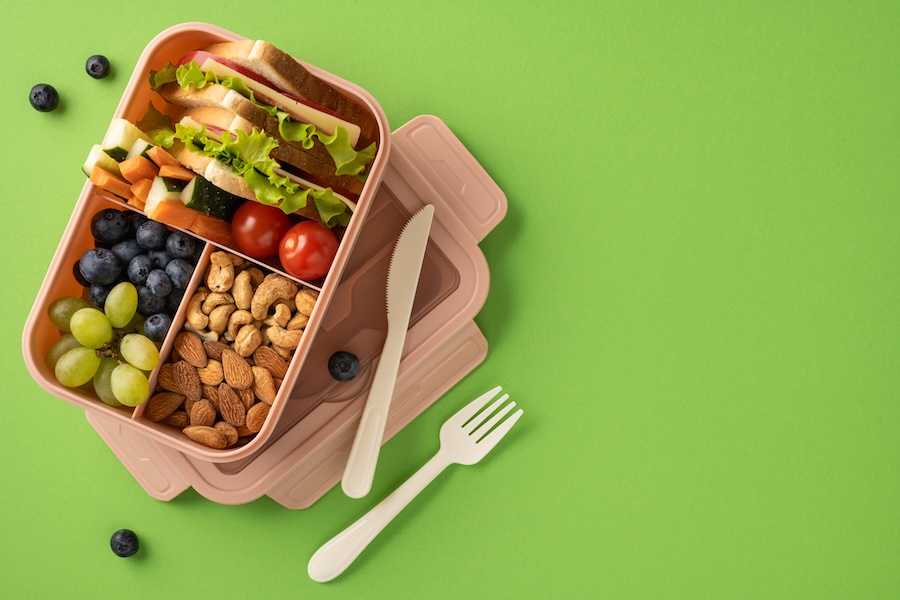
String cheese, cheese cubes, or small slices can be paired with apple slices, crackers, cucumber rounds, or a small sandwich. Since cheese contains protein and calcium, it can also help the snack feel more satisfying.
Crackers still deserve a little thought, though. Many break down into a soft starch that can settle into the grooves of the back teeth. Therefore, pairing crackers with cheese and water is better than sending a large bag of crackers on its own.
Fresh Fruit Usually Beats Sticky Fruit Snacks
Fresh fruit brings natural sweetness to a lunchbox, along with fiber and water. Apples, pears, strawberries, blueberries, melon, grapes cut for age and safety, and orange slices can all work well.
Dried fruit is a little different. Raisins, fruit strips, dried mango, and many fruit snacks tend to cling to teeth, which gives sugar more time to sit in the mouth. Some fruit snacks also contain enough added sugar to look more like candy once the label is read closely.
That does not mean dried fruit has to disappear from the lunchbox. It simply makes more sense as an occasional item than an everyday replacement for fresh fruit. When sticky snacks are packed, water with lunch can help wash away some of the residue.
Crunchy Vegetables Can Be Easier With a Dip
Carrot sticks, cucumber slices, bell pepper strips, celery, and snap peas add crunch without adding much sugar. However, most children are not going to cheer because plain celery appeared beside their sandwich.
A small container of hummus, guacamole, ranch, or another dip a child enjoys can make vegetables far more likely to get eaten. Parents can also start with one vegetable the child already accepts instead of filling the lunchbox with a colorful assortment that returns home untouched.
For younger children, hard foods should be cut into age-appropriate pieces. The same applies to round foods such as grapes and cherry tomatoes, which may need to be sliced for safety.
Yogurt Can Work Without Being Boring
Yogurt can be an easy source of protein and calcium, although the sugar content varies quite a bit from one brand to another.
Instead of expecting a child to get excited about plain yogurt, parents can look for a lower-sugar flavored option or choose vanilla yogurt with berries, sliced banana, or a small sprinkle of granola. Some children may also prefer drinkable yogurt, although those products can be high in added sugar, so comparing labels helps.
The goal is not to remove every sweet flavor from the lunchbox. Rather, it is to avoid yogurts that contain nearly as much added sugar as a dessert.
A cold pack is important for food safety, especially during warmer months in Sunnyvale. A reusable spoon is also worth remembering because even a well-packed yogurt will come home unopened if a child has no way to eat it.
Nuts and Seeds Can Be Useful for Older Children
Nuts and seeds can be filling and easy to pack, provided they are allowed by the school and safe for the child’s age.
Almonds, cashews, pumpkin seeds, and sunflower seeds can add protein and healthy fats to a lunch. Nut or seed butter can also be spread on apple slices, whole-grain bread, or a tortilla.
However, school allergy policies always come first. Some classrooms and campuses do not allow peanuts or tree nuts, so families should check before sending them. Whole nuts can also be a choking hazard for younger children, which makes softer alternatives a better fit in those years.
Whole-Grain Snacks Still Need Balance
Whole-grain crackers, mini pitas, oat-based snacks, and whole-wheat wraps can all have a place in a school lunch. Still, “whole grain” does not automatically mean ideal for teeth.
Starchy foods break down into sugars, and soft crackers may become lodged in the grooves of molars. For that reason, they work better when paired with cheese, fruit, vegetables, or another protein source instead of making up most of the snack.
Parents should also look beyond the front of the package. Granola bars, cereal bars, and oat bites may sound wholesome while still being sticky and high in added sugar. Some are reasonable lunchbox options, while others are closer to dessert.
Water Is Usually the Best Lunchbox Drink
Juice boxes and flavored drinks are easy to pack, but they can expose teeth to sugar and acid during the school day.
Water hydrates without feeding the bacteria associated with cavities, and it can help rinse away bits of food after lunch. For most school days, it is the simplest choice.
If juice is included, a small serving with the meal is better than a drink that is sipped slowly throughout the afternoon. The longer teeth are exposed to sugar and acid, the more opportunity there is for enamel to weaken.
Milk can also be a reasonable option when it is available and kept cold. However, flavored milk contains added sugar, so plain milk is generally the better everyday choice.
Some “Healthy” Snacks Are Stickier Than They Look
A number of lunchbox foods carry a healthy image while still being high in sugar, starch, or both. Fruit gummies, yogurt-covered raisins, sweetened applesauce pouches, chewy granola bars, and cereal bars can all stick to teeth. Crackers and chips may linger in the mouth longer than parents expect as well.
These foods do not need to be banned. However, they are better used occasionally and packed as part of a meal rather than eaten alone throughout the day.
Marketing on the front of the package can be persuasive, but the added sugar line and ingredient list usually give parents a clearer picture.
A Tooth-Friendly Lunch Still Has to Be Eaten
A lunch can look balanced when it leaves the house and still return almost untouched.
Children often have limited time to eat, and school cafeterias can be noisy or distracting. Therefore, foods that require too much peeling, opening, or assembly may never make it out of the container.
Parents can make lunches easier by cutting fruit, using containers children can open, and keeping portions reasonable. It also helps to involve children in choosing between a few parent-approved options.
For example, a child might choose strawberries or apple slices, cheese cubes or yogurt, and cucumber rounds or carrots with dip. That small amount of control can make a surprisingly big difference in whether the food gets eaten.
Braces and Orthodontic Appliances Change the Snack List
Children with braces may need to avoid foods that can bend wires, loosen brackets, or become wedged around appliances. Hard nuts, popcorn, sticky candy, and very crunchy foods may need to be limited or prepared differently.
Softer choices such as yogurt, cheese, sliced fruit, soft vegetables, eggs, and sandwiches are often easier to manage. Apples and carrots can still be included, although cutting them into thin slices or small pieces usually makes them easier to eat.
Children who wear removable appliances should follow their dentist’s or orthodontist’s instructions about eating and cleaning. In either case, drinking water after lunch can help clear away food until brushing is possible.
Simple Lunchbox Combinations for Busy Mornings
Parents do not need a brand-new idea every day. A short list of reliable combinations can make school mornings much easier.
A lunch might include cheese cubes, apple slices, whole-grain crackers, and water. Another day could feature vanilla yogurt with berries, cucumber slices with dip, and a small sandwich. Hummus with pita pieces, bell pepper strips, and melon can also work well.
For children who prefer familiar foods, a turkey and cheese roll-up with strawberries and water may be enough. The lunch does not need to look fancy. It simply needs to be satisfying without leaving the teeth coated in sugar for hours.
School Snacks Are Only One Part of the Routine
Lunchbox choices play a role in oral health, although they work best alongside regular brushing, fluoride toothpaste, and routine dental visits.
Brushing twice a day helps remove plaque and food residue, while dental exams give Dr. Lindley a chance to check for early signs of decay, review a child’s brushing habits, and recommend preventive care based on age and cavity risk.
Dental sealants may also be recommended for some children once the permanent back teeth come in. These thin protective coatings can help cover the deep grooves where food and bacteria often collect.
Small choices add up over a school year. Replacing a sticky snack, choosing water more often, or adding cheese or fruit to the lunchbox may not seem dramatic, but repeated habits can support healthier teeth over time.
Healthy School Lunches With Anne Lindley, DDS in Sunnyvale
The best snacks for healthy teeth in school lunches are usually simple, familiar foods that children are willing to eat. Cheese, fresh fruit, vegetables with a favorite dip, lower-sugar yogurt, whole-grain snacks, and water can all fit into the rotation.
Parents do not need to rebuild the entire lunchbox in one morning. Start with one dependable change, such as swapping a sticky fruit snack for fresh fruit or replacing a juice box with water a few days each week.
Schedule a visit with Anne Lindley, DDS in Sunnyvale, TX, for personalized guidance on cavity prevention, school lunch habits, and your child’s developing smile!
Contact UsCategorised in: Nutrition, Pediatric Dentistry